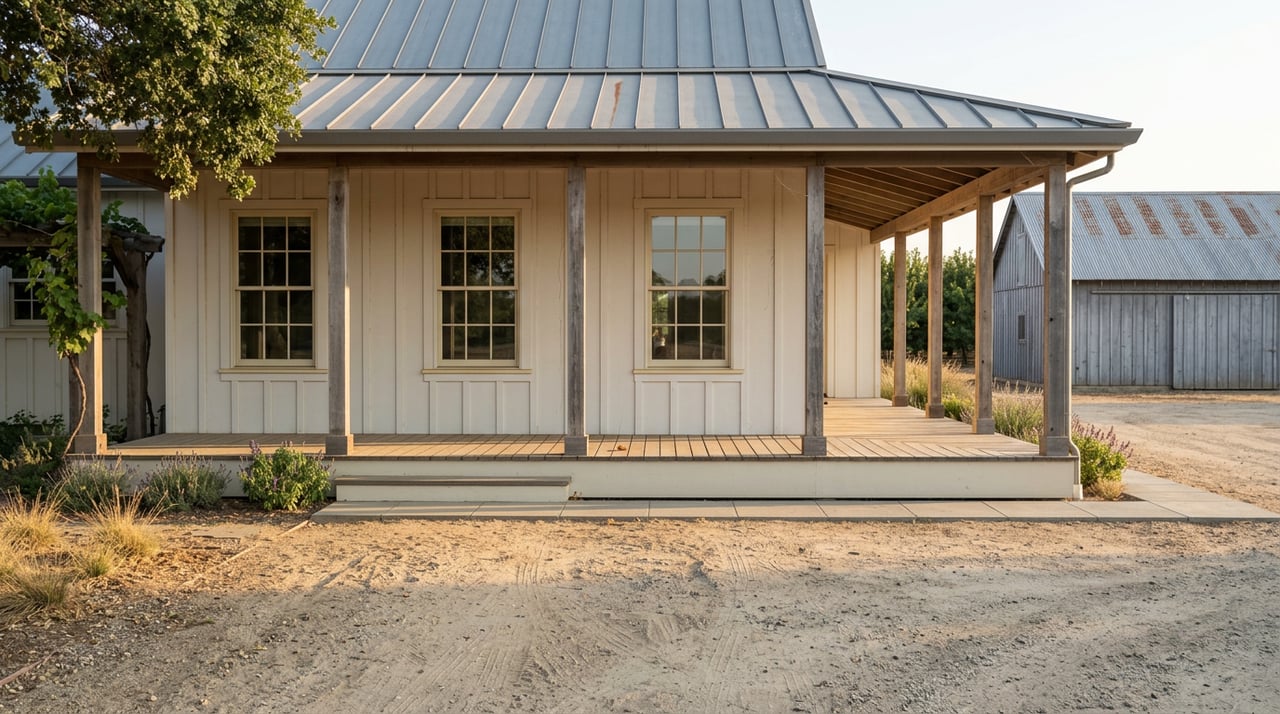
The Well Moratorium Isn't What Limits Land in Capay Valley. This Is.
August 20, 2026
August 20, 2026
Since August 2025, Yolo County has been operating under a moratorium on new agricultural well permits. Farmers packed board meetings. The county extended the freeze that October, pushing it into August 2026. If you've spent any time researching acreage in western Yolo County, you've likely run into some version of this story, and it's the kind of headline that makes a buyer nervous about drilling anything at all.
If you're looking specifically at land in Capay Valley, that moratorium was never really about you.
When county staff first brought the well pause to the Board of Supervisors, their own recommendation was to leave Capay Valley out of it entirely. Their reasoning was blunt: there are no areas of special concern in those areas or data gaps. The restriction that's made regional news for a year applies to Focus Areas where groundwater levels are declining and poorly measured, places like the Dunnigan Hills, where water tables have dropped and land subsidence has shown up in monitoring data. Capay Valley wasn't flagged as one of those places.
That doesn't mean Capay Valley land is unrestricted. It means the restriction that actually shapes what you can do with a parcel here isn't the one making headlines. It's older, quieter, and already written into most of the deeds.
Ordinance 1576, adopted by the Board of Supervisors on August 26, 2025, paused new and modified agricultural well permits inside specific Focus Areas identified by the Yolo Subbasin Groundwater Agency. The Board extended that pause on October 7, 2025, for up to ten months and fifteen days, which keeps the freeze in effect through August 2026. That means it's still active right now, and worth asking about on any parcel you're evaluating this month.
A few details matter if you're evaluating a specific property. The freeze applies only to new or modified agricultural wells inside Focus Areas. Domestic wells, public water system wells, and monitoring wells are exempt outright, regardless of location. A farmer whose existing well fails can still replace it like for like, same or smaller capacity, same parcel, old well properly abandoned, under a resolution the Board passed on November 4, 2025. None of this reaches a homesite well on a residential parcel, and none of it reaches Capay Valley's Management Area, which staff recommended excluding from the Focus Areas map in the first place.
So if a listing agent tells you water access is uncertain because of "the county moratorium," ask which Focus Area the parcel sits in and whether the well in question is agricultural or domestic. Those two questions resolve most of the confusion.
Here's the restriction that actually matters for most Capay Valley acreage, and it has nothing to do with a 2025 ordinance. It's been in place since 1965.
More than 90 percent of Yolo County's land surface is zoned for agricultural use in a way that precludes residential, commercial, and industrial development inconsistent with farming. Roughly three-quarters of the unincorporated county, which includes most of Capay Valley, sits under Williamson Act contracts, agreements between the landowner and the county that trade a lower property tax assessment for a promise to keep the land in commercial agriculture.
The tax benefit is real. So is the restriction that comes with it. Uses permitted "by right" or through routine review inside these agricultural and open space zones are treated as compatible with the contract. Housing for agricultural workers is one example the state legislature specifically protects as a compatible use. Anything else, particularly converting a working parcel into a standalone residential homesite, tends to require discretionary approval that the contract itself doesn't grant.
Getting out of a Williamson Act contract isn't instant either. A landowner or the county can file a notice of nonrenewal, but that starts a countdown rather than an exit. For a standard agreement, the remaining term runs nine years. For a Farmland Security Zone contract, the deeper tax discount and the longer commitment that comes with it, the countdown runs eighteen years. A parcel that looks like a blank canvas on a listing photo may actually be nine or eighteen years away from being anything other than what it already is.
Before you get attached to a specific piece of ground, ask the seller or the title company three things: is the parcel currently under a Williamson Act or Farmland Security Zone contract, has a notice of nonrenewal already been filed, and if so how many years are left on the clock. Those answers tell you more about what the land can become than the asking price ever will.
Assume the zoning and the contract status both check out. The land still has to prove it can handle a septic system before you can commit to a building footprint, since most of Capay Valley sits well outside any sewer connection.
Yolo County's Environmental Health Division requires a formal Site Evaluation before it will approve a septic design. A licensed Qualified Professional digs a minimum of two soil pits to at least eight feet deep, one in the area planned for the primary system and one in the reserve area set aside for a future replacement field. County staff attend the dig. The soil texture, the depth to groundwater, and the site topography from that evaluation determine what kind of system the parcel can support, and whether it can support one at all in the spot you had in mind.
One detail surprises people who've bought rural land elsewhere. Yolo County doesn't require a percolation test. Many counties lean on a simple pass or fail perc number to size a system. Here, the design rests entirely on the Qualified Professional's soil profile from those two pits, which means the quality of that evaluation matters more, not less, than it would somewhere with a numeric perc standard to fall back on.
If the soil comes back with a high water table, impervious clay, or a shallow rock layer, you're not looking at a standard gravity system anymore. You're looking at an alternative system, engineered by a Qualified Septic Designer and installed by a licensed contractor, that likely requires an annual Operating Permit and a Notice on Property Deed recorded at the County Recorder's office in Woodland before the county will sign off. That's a real cost and timeline difference between two parcels that might look identical from the road.
Esparto, the town most people mean when they say Capay Valley, has had an odd run over the past year. Over the three months ending May 2026, the median sale price hit $540,000, up 25.5 percent from the same period a year earlier, with price per square foot up nearly 7 percent. On its face, that reads as a market on fire.
Look at the pace of those sales and the story gets more complicated. Homes were taking an average of 28 days to sell as of that window, up from 8 days the year before. Zoom out to the trailing twelve months and the median actually comes in lower, at $482,500, down 9 percent from the prior twelve-month period, with an average of 94 days on market and only 14 total sales for the year. Land inventory is thin too, with only a handful of parcels listed for sale in Esparto at any given time.
None of those numbers are wrong. They're just measuring a market small enough that a single well-financed sale or a single stalled escrow can swing the percentage in either direction. A rising median alongside a longer time to sell usually means buyers are taking real time to do exactly the kind of diligence this piece walks through, checking contract status, ordering the site evaluation, confirming which Focus Area a well falls in, before they're willing to close. In a market this thin, that extra month on market isn't hesitation. It's the paperwork catching up to the price.
Land in Capay Valley rewards patience more than speed. The price on the sign tells you almost nothing about what the parcel can legally become, how long that takes, or what the ground underneath it will actually support. Working through those questions before you're under contract is the difference between buying a property that matches your plans and discovering the mismatch nine years into a contract you didn't know was still running.
If you're weighing a specific parcel in Capay Valley or comparing it against other rural options in Yolo County, Lupe Springer has spent two decades working through exactly this kind of due diligence, from ranchette purchases to new construction on raw acreage. Schedule a free consultation to talk through what a particular property can actually deliver before you make an offer on it.
Stay up to date on the latest real estate trends.
Experience a real estate partnership built on trust, expertise, and genuine care. Lupe brings a lifelong understanding of what “home” truly means to every client and every decision.