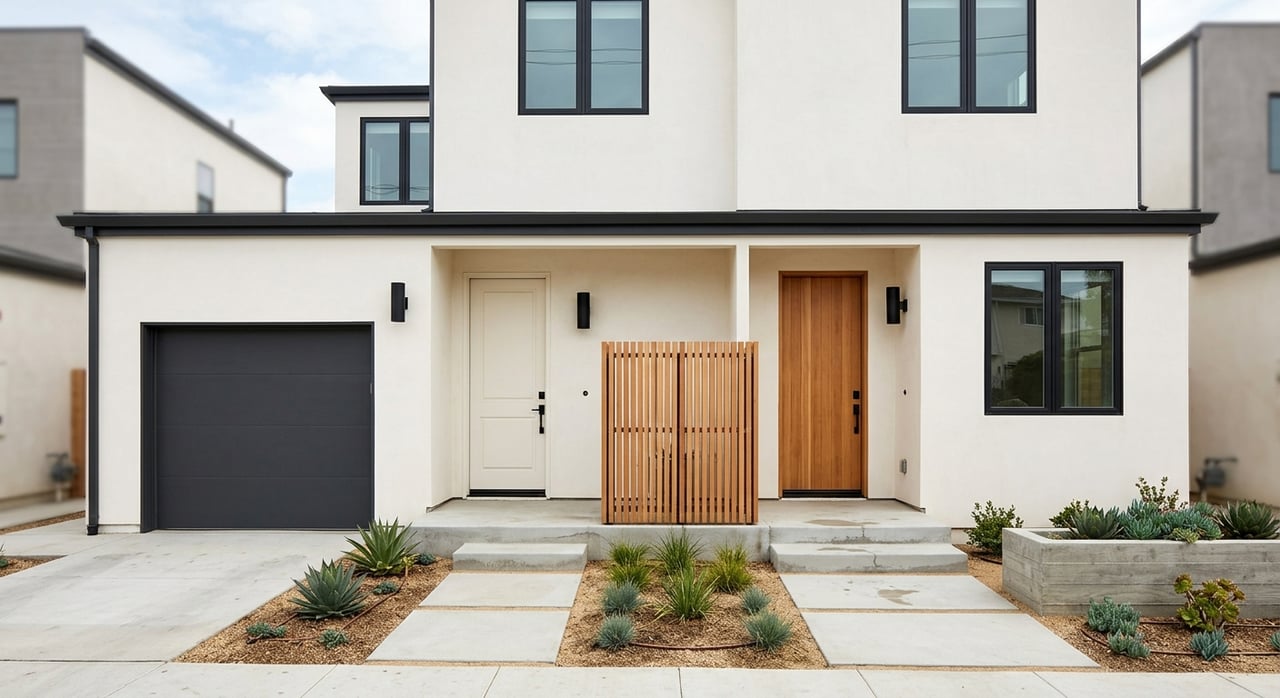
Condo vs. House in Davis: Which Option Fits You?
July 9, 2026
July 9, 2026
If you’re trying to decide between a condo and a house in Davis, the choice can feel bigger than square footage alone. You may be weighing budget, maintenance, privacy, and how much control you want over the property. The good news is that Davis offers both options, and each can make sense depending on your goals. This guide will help you compare condos, townhomes, and detached homes in practical terms so you can move forward with more confidence. Let’s dive in.
Davis has a more varied housing mix than many buyers expect. According to the city’s planning analysis, about 45.5% of the housing stock is single-family detached, 9.0% is single-family attached, and 43.4% is multifamily.
That matters because you are not choosing between a rare niche product and the “normal” option. In Davis, both detached homes and attached living options are meaningful parts of the market. Detached homes are still the most common, but condos and townhomes make up a large share of what buyers consider.
For many buyers, price is the starting point. In Davis sales data from March 2024 to March 2025, 49 condos and townhomes sold at a median price of $503,000, while single-family homes sold at a median price of $875,000.
That is a major gap. The same report notes that attached homes were 43% less expensive, which helps explain why condos and townhomes often appeal to buyers looking for a lower entry point in Davis.
You should also know what those attached-home sales looked like. Nearly two-thirds were 2-bedroom units, while another 31% were 3-bedroom units, so much of the attached market is built around practical, moderate-size layouts.
One of the biggest points of confusion in California is that a condo is a legal ownership form, while a townhome is an architectural style. In other words, a property that looks like a townhome may legally be a condominium, or it may be part of a planned development.
That distinction affects what you actually own and what the homeowners association controls. The exterior style may catch your eye first, but the governing documents tell you far more about your rights, responsibilities, and long-term costs.
In California, both condominiums and planned developments can include common area, exclusive-use yards, driveways, parking spaces, and shared amenities. That means you should not assume that an attached home always comes with less outdoor space, or that a detached home always comes with total independence.
Some detached homes are also located in planned developments with HOA-owned common areas or private streets. So if you are trying to compare “condo versus house” in Davis, the better question is often: What does this specific ownership structure include?
In Davis, condos and townhomes usually compete on affordability and convenience. If your priority is getting into the market at a lower price point, reducing exterior maintenance, or simplifying day-to-day upkeep, an attached home may check a lot of boxes.
This can be especially appealing if you want to spend less time managing roofs, exterior repairs, or landscaping. In many projects, those responsibilities are handled in part through the HOA, though the exact split depends on the CC&Rs and maintenance plan.
That tradeoff is important. You may gain convenience and a lower purchase price, but you will usually accept shared rules, shared areas, and less freedom to make exterior changes without approval.
Detached homes in Davis generally compete on lot size, privacy, and flexibility. If you want more autonomy, a yard, or a layout that feels more like a stand-alone property, a detached home may be the better fit.
In practical terms, detached ownership often gives you more control over the land and exterior changes. But “more control” does not mean “no extra layers.” Some detached homes are still in HOA communities, and newer neighborhoods may also include Community Facilities District taxes, often called Mello-Roos.
So while detached homes can offer more independence, they also tend to require a larger budget and more hands-on upkeep. That can be worth it if those features matter to how you want to live.
A lower list price does not always mean a lower monthly cost. In California, property taxes are generally based on assessed value, with Proposition 13 generally limiting the ad valorem rate to 1% of full cash value, plus local voter-approved bonded indebtedness.
When ownership changes or new construction is completed, reassessment usually happens. The county may also issue supplemental tax bills, which can make the first year of ownership more expensive than a standard escrow estimate suggests.
In Davis, another layer may apply. The city currently has seven Community Facilities Districts, and properties within those districts pay special taxes that help finance public facilities and infrastructure.
If you are comparing a condo to a detached home, it helps to look at the full monthly picture:
HOA dues are a recurring cost in condos and many townhomes, and the amount varies by project. Those dues can cover common-area upkeep and other shared expenses, which is one reason an attached home may feel easier to maintain.
At the same time, HOA fees can offset part of the purchase-price advantage. A condo that costs far less upfront may still have a monthly budget that feels closer to a detached home once you factor in dues, taxes, and special assessments.
This is why looking at price alone can be misleading. You want to compare the monthly carrying cost, not just the sales price.
Davis remains a competitive market. Over the last three months, Redfin reports that homes sold in about 11 days on average, received about 2 offers on average, and had a median sale price of about $830,000 in May 2026.
In that kind of market, both property type and clarity matter. For resale, the issue is not only whether a home is attached or detached. It is also whether the HOA and maintenance structure are easy for the next buyer to understand.
Clear CC&Rs, predictable dues, and well-documented reserves generally make attached homes easier to compare. On the other hand, weak reserves or restrictive rules can narrow the buyer pool.
If you are feeling torn, it helps to come back to your daily life and budget. The right choice is usually the one that best matches how you want to live, what you want to manage, and what monthly payment feels comfortable.
The best choice often becomes clearer once you review the property documents and ownership details. In Davis, these are some of the most useful due-diligence questions to ask:
These questions may sound technical, but they shape both your monthly budget and your long-term flexibility. They also affect how easy the property may be to resell later.
In Davis, condos and townhomes are usually the lower-price, lower-maintenance option, while detached homes typically offer more independence, yard space, and flexibility. Neither is automatically better. It depends on your budget, your comfort with HOA structure, and the kind of ownership experience you want.
A careful review of CC&Rs, dues, taxes, and maintenance responsibilities can save you from surprises later. If you want help comparing real options in Davis and sorting through the tradeoffs in plain language, Lupe Springer can help you evaluate the details and choose with confidence.
Stay up to date on the latest real estate trends.

Experience a real estate partnership built on trust, expertise, and genuine care. Lupe brings a lifelong understanding of what “home” truly means to every client and every decision.