Guide to Living in Central Woodland Historic Homes
February 19, 2026
February 19, 2026
Love the idea of walking under mature trees to grab coffee, catching a show at the Opera House, and heading home to a classic Craftsman porch? If you’re drawn to history and want daily convenience, Central Woodland’s historic core delivers both. In this guide, you’ll learn where Central Woodland begins and ends, what the architecture and streets feel like, housing types and prices, renovation rules, and a practical buyer checklist. Let’s dive in.
When locals say “Central Woodland,” they usually mean the historic Main Street corridor and the residential blocks just north and south of it. The City identifies a Downtown Woodland Historic District and treats downtown as the civic and commercial core. The Downtown Specific Plan breaks the area into districts, which explains why uses and building types change block by block. You’ll find the Main Street commercial core, nearby Government Center, Transition/Residential areas, and mixed-use edges.
Real estate platforms often use labels like “Central Woodland” in listings, but those names are informal. For any renovation, historic designation, or permitting question, confirm parcel-level details with City Planning. Start with the City’s overview of Historic Preservation and the Downtown Specific Plan Design Guidelines.
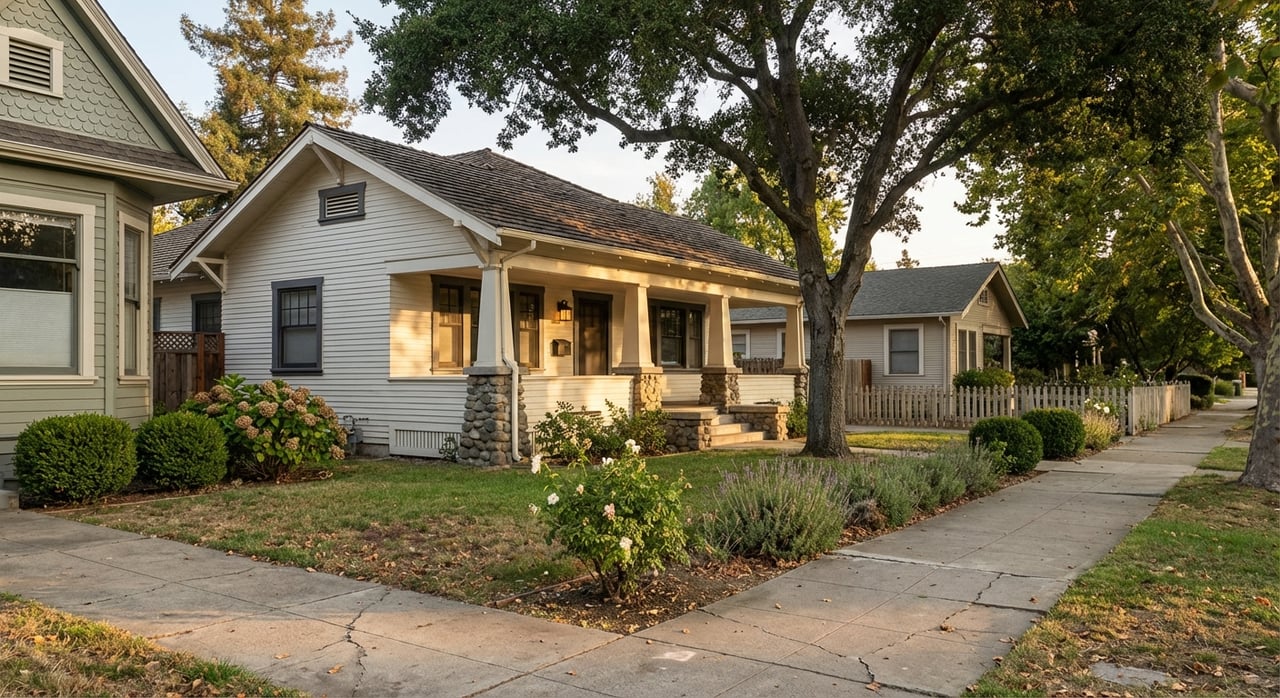
Downtown and its nearby blocks showcase buildings from the late 1800s through the 1940s, with some 1930s–1950s infill in transition areas. You’ll see Victorian and Italianate commercial fronts, Richardsonian and Second Renaissance Revival civic buildings, Spanish and Mediterranean Revival details, and many Craftsman bungalows. The City’s walking-tour materials highlight hundreds of structures and styles across the district. Explore more through Historic Woodland walking resources.
The streetscape is a big part of the appeal. Mature trees and a steady sidewalk-and-porch rhythm create a welcoming feel. Woodland embraces its “City of Trees” identity, with a Landmark Trees program and urban-forest priorities that help preserve this look. See how heritage trees shape the neighborhood via the City’s Landmark Trees program.
Main Street anchors daily life with independent restaurants, bars, cafes, small retail, and cultural venues. The restored Woodland Opera House hosts performances year-round and serves as a cultural anchor for the district. Learn about its history and events through the Woodland Opera House State Historic Park.
Regular events bring the area to life, including farmers markets, Food Truck Mania, the Stroll Through History home tours, and the annual Yolo County Fair at the fairgrounds. It feels like a small-city downtown that is both historic and active.
Addresses on or near Main Street often score very well for walkability. Some points along the corridor reach “Walker’s Paradise” levels on Walk Score’s Woodland map. Public transit is available but less extensive than in large metros. Yolobus provides local and intercity routes, including connections to the Sacramento International Airport; see Yolobus airport and route info.
You’ll encounter a mix of historic single-family homes, small multi-unit conversions near transition zones, and commercial or mixed-use buildings fronting Main Street. Lot sizes and setbacks vary by district. On Main, buildings typically meet the sidewalk, while nearby residential blocks offer smaller bungalow lots and select avenues with larger period parcels.
Living near downtown usually means short walks to dining, entertainment, and civic services. In exchange, lots can be smaller, and some homes need maintenance or updates. Many parcels include alley access and detached garages, which can add flexible storage or parking.
Public market indices show a Woodland city baseline rather than a downtown-only view. In late 2025 and early 2026 snapshots, citywide medians were roughly in the mid-$500,000s. Within the historic core, recent sales show a wide spread by size, condition, and lot. Smaller or updated bungalows and Craftsman homes have closed in the roughly $400,000 to $600,000 range. Larger restored period properties and homes on substantial parcels have reached near or above $900,000 to about $1.2 million.
The takeaway: price dispersion is real, even within a few blocks. For a specific property, you’ll want recent comparable sales on the same street or immediate area and by house style. MLS sold data is essential for precision.
If you plan exterior work, expect to coordinate with the City. Woodland maintains a Historic Preservation program, and the Downtown Specific Plan outlines design standards. Depending on a property’s status and location, exterior changes can require review. It’s smart to contact Planning early to discuss your scope. Start with the City’s Historic Preservation program page and the Specific Plan Design Guidelines.
Some historic properties may qualify for special financial programs. In California, the Mills Act can offer property tax relief for eligible historic resources where a local program exists. Availability and terms depend on local participation and ordinance rules, so verify with the City and review the State Office of Historic Preservation’s Mills Act overview.
Historic homes can be remarkably solid, but age brings routine needs. A thorough inspection by pros familiar with older structures will help you plan and budget. Typical focus areas include:
For preservation-minded upgrades, see the industry guidance on compatible materials and sensitive repairs from the Whole Building Design Guide.
Use this quick list to focus your due diligence:
You may be a great fit if you want a classic home, enjoy short walks to dinner and shows, and value the character that comes with historic architecture. If you travel regionally or fly often, proximity to major routes and Yolobus airport connections can help. If you plan a thoughtful renovation, the neighborhood rewards sensitivity to scale and details.
Selling a home here calls for a block-by-block pricing strategy. Given the wide range of styles and updates, clear staging and repair plans can help you reach the right buyers and justify value.
Start with a coffee on Main Street, stroll past brick facades, and take in the shade from established trees. Catch a matinee or evening performance at the Opera House, then meet friends for dinner steps away. Wrap up with an easy walk home to your porch or garden. It’s a simple, connected rhythm that is hard to beat.
If Central Woodland’s historic core sounds right for you, let’s map your options. I’ll help you weigh tradeoffs, price with precision, and plan upgrades that respect the home. When you are ready, connect with Lupe Springer to schedule a free consultation.
Stay up to date on the latest real estate trends.
Experience a real estate partnership built on trust, expertise, and genuine care. Lupe brings a lifelong understanding of what “home” truly means to every client and every decision.