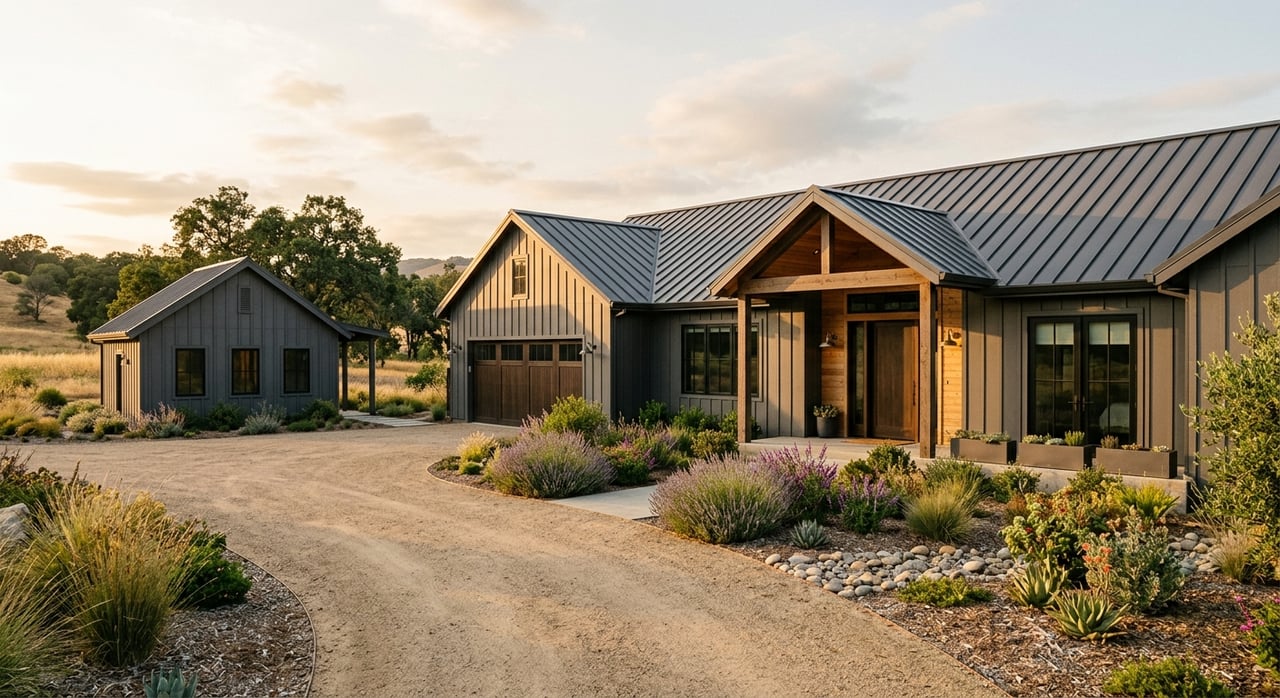
Capay Valley Rural Homes and the Realities of Rural Living
April 2, 2026
April 2, 2026
If you have ever pictured a home where your day starts with open views, a long growing season, and enough land to shape around your routines, Capay Valley may already be on your radar. Rural living can sound simple from a distance, but the day-to-day reality depends on much more than a pretty setting. In Capay Valley, the details that matter most are often the land, water, access, and how a property functions over time. Let’s take a closer look at what it means to imagine a rural lifestyle here.
Capay Valley is not one compact town. According to the Capay Valley Area Plan from Yolo County, it is a rural planning area in northwestern Yolo County that stretches about 20 miles from the north county line to Capay Dam and covers roughly 106,000 acres.
The valley is organized around communities including Brooks, Capay, Guinda, and Rumsey, along with surrounding foothill and valley-floor land. That matters because when you look at property here, you are not stepping into a suburban pattern. You are stepping into a region shaped by agriculture, open ground, and small rural communities.
Yolo County’s general plan vision statement makes that direction clear. The county emphasizes preserving productive farmland and open-space amenities while limiting non-agricultural development mostly to existing communities.
One of the first things you may notice in Capay Valley is the sense of space. That feeling is not accidental. County planning policy has long focused on retaining agricultural lands across the hills, foothills, and valley floor, which helps preserve a land-centered character rather than a subdivision-centered one.
The area plan also notes that farm equipment movement along State Route 16 is essential to crop production. In practical terms, that helps explain why the valley often feels slower, more spread out, and more rooted in working land than nearby urban or suburban markets.
In Capay Valley, the house is only part of the story. The county area plan describes fertile soils used primarily for irrigated orchards and row or field crops, with important local commodities including livestock, organic vegetables, processing tomatoes, almonds, citrus, grapes, and walnuts.
That means buyers often need to think beyond bedrooms and finishes. You may need to evaluate whether the land supports your goals, whether that means gardening, horse keeping, orchard potential, pasture use, or simply enjoying a larger rural homesite with fewer nearby structures.
If you are considering a rural property in Capay Valley, these features often carry as much weight as the home itself:
For many buyers, this is a shift in mindset. Instead of asking only, “Do I like the house?” the better question becomes, “Will this property support the way I want to live?”
Public listings in the area show just how different rural properties can be. Examples in the broader valley area include a 5-acre ranch property with a horse barn, four stalls, a tack room, and automatic watering, a 25.95-acre Brooks parcel described with AG zoning for farming, ranching, vineyard, or equestrian use, and a 42.69-acre Guinda property with multiple wells, water rights, commercial buildings, and a second home.
These examples highlight an important truth about the valley. Two homes may both be “rural,” but the lifestyle they support can be completely different. One property may be ready for horses, one may be best for crop or orchard use, and another may offer a more complex mix of residential and agricultural infrastructure.
For lifestyle properties, it helps to look at daily function first. A beautiful setting is valuable, but if fencing is limited, water access is uncertain, or outbuildings do not match your needs, the property may not fit your routine as well as it seems at first glance.
This is especially true for horse owners and hobby-farm buyers. Stalls, pasture condition, turnout options, feed access, and water systems shape your day much more than interior décor.
Capay Valley’s climate is one of its biggest lifestyle drivers. The county says the area has hot, dry summers and cool, damp winters, with about 17 to 24 inches of annual rainfall and an approximately 235-day frost-free growing season from April through October.
For many buyers, that long growing window is part of the appeal. It can support gardening and other productive land uses over a large part of the year, but it also comes with practical demands.
A rural property here may ask more of you than a standard suburban lot. With the local climate, irrigation, shade planning, mulching, and water storage can become part of regular property care.
That does not make rural life harder in a negative sense. It simply means the lifestyle is more hands-on. If that sounds appealing, Capay Valley may feel like a natural fit.
Water is one of the most important factors to understand before buying in the valley. The county plan says the area’s water supply comes from rainfall, surface water, and groundwater, with Cache Creek serving as the largest perennial water source.
At the same time, the plan notes floodplain and washout concerns along parts of the valley floor. That means a property’s relationship to water is not just about scenery. It can affect drainage, access, land use, and long-term maintenance.
When you consider a rural property, it helps to ask practical questions such as:
These questions can help you understand the property as a working system, not just a home site.
Capay Valley naturally attracts buyers looking for room to keep horses or manage a small-scale farm routine. The current listing examples in the area make clear that some parcels are set up with features like stalls, tack space, and acreage that may support equestrian use, while others offer decorative space without the same functional setup.
If horses are part of your lifestyle, the right property usually comes down to the basics. You want to look closely at pasture usability, cross-fencing, trailer access, and whether the infrastructure supports everyday care.
For buyers with a hobby-farm vision, the same logic applies. Productive land, water access, and room for equipment or storage often matter more than surface-level appeal.
Life in Capay Valley is not only about private acreage. The area also offers public open space that reinforces the region’s rural setting. Capay Open Space Park includes 41 acres, direct access to lower Cache Creek, and more than two miles of walking trails through habitat areas such as riparian woodland, riparian scrub, floodplain, and oak savanna grassland.
In Rumsey, Valley Vista Regional Park adds 587 acres of natural area, rural hiking trails, steep terrain, and access to 54,000 acres of BLM land. If being close to open landscapes is part of what draws you to rural living, these public spaces add another layer to the experience.
Even in a region defined by open land, community still matters. Tuli Mem Park in Esparto was created through volunteer effort for Capay Valley residents and includes sports fields, a walking trail, a gathering area, and a pool complex.
Capay Valley Grown also describes the area as a place for farm experiences, seasonal farm trails, markets, workshops, and community celebrations. That gives the valley a rhythm that feels tied to the land while still offering local gathering points.
One of the clearest examples is the Capay Valley Almond Festival, a five-town event along a 21-mile route through Rumsey, Guinda, Brooks, Capay, and Esparto. It reflects how the valley’s identity is built around both agriculture and community life.
Capay Valley can be a great fit if you want space, open views, and a property that supports a more hands-on lifestyle. It may also appeal to you if you value land utility, agricultural character, or equestrian potential more than being in a conventional neighborhood setting.
At the same time, rural living usually asks for more planning. In this part of Yolo County, acreage, terrain, water, infrastructure, and access often shape your quality of life just as much as the house itself.
That is why it helps to approach Capay Valley as a land-and-lifestyle decision first. When you do, you can evaluate properties more clearly and choose one that supports how you actually want to live.
If you are exploring rural homes, ranchettes, or horse properties in Yolo County, working with someone who understands how these properties function can save you time and help you focus on the right opportunities. When you are ready to talk through your goals, Lupe Springer offers experienced, hands-on guidance rooted in Yolo County lifestyle property expertise.
Stay up to date on the latest real estate trends.

Experience a real estate partnership built on trust, expertise, and genuine care. Lupe brings a lifelong understanding of what “home” truly means to every client and every decision.